
US President Donald Trump has rejected Iran's proposal to end the ongoing war, deeming it 'totally unacceptable'. This decision comes amid efforts to negotiate an end to hostilities that began on February 28 and have disrupted global oil supplies.

Bollywood has captured the essence of India's youth activism and student protests, from fighting corruption in Yuvaa to demanding accountability in Rang De Basanti.
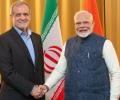
Prime Minister Narendra Modi held a telephonic conversation with Iranian President Masoud Pezeshkian, discussing recent developments in West Asia and reiterating India's emphasis on the importance of freedom of navigation in the Strait of Hormuz. Modi welcomed the recent peace understanding between the US and Iran, stressing dialogue and diplomacy for regional stability. India will also send representatives to the burial ceremonies of Iran's late Supreme Leader.

India and Australia have signed significant agreements covering civil nuclear energy, maritime security, and critical minerals, reinforcing their partnership's role in ensuring a peaceful Indo-Pacific. The pacts facilitate uranium supply from Australia to India and enhance cooperation in defence, cyber, and critical technologies.

Israel has strongly condemned Pakistan Defence Minister Khawaja Asif's "outrageous" remarks calling for Israel's annihilation and labelling it "evil" and a "curse for humanity", raising doubts about Pakistan's role as a "neutral arbiter" for peace.

The Internet only wants to sell you the winning part. The masterclass, the framework, the seven habits. Nobody sells you the story of losing.

Educator and climate activist Sonam Wangchuk has stated his hunger has 'stabilised' on the 13th day of his indefinite fast, asserting his constitutional right to protest should not be violated by attempts to remove him from the site. He continues to support the Cockroach Janta Party's (CJP) demands for Union Education Minister Dharmendra Pradhan's resignation and government accountability over alleged examination irregularities, as well as an early resolution for Ladakh's issues.

Iran has presented a multi-layered proposal to the US in an attempt to break the deadlock in peace talks, focusing on de-escalation and nuclear programme discussions.

The Cockroach Janta Party (CJP) has ended its 36-day protest at Jantar Mantar over the NEET issue after Education Minister Dharmendra Pradhan's resignation and the government accepting all their demands. The agreement includes compensation for suicide victims' families, withdrawal of FIRs, and future discussions on examination system reforms.

Clashes erupted during the first phase of legislative assembly elections in Pakistan-occupied Kashmir (PoK), with the banned Joint Awami Action Committee (JAAC) claiming 14 deaths, a figure disputed by law enforcement. India condemned the elections as an attempt by Pakistan to legitimise its illegal occupation and human rights abuses in the region, while ongoing JAAC protests highlight deep-seated grievances.

Hours after warning that the United States could strike Iran "very hard tonight", President Donald Trump announced to halt planned military action, despite earlier threats to target Kharg Island and other key Iranian oil facilities.

Former US President Donald Trump reiterated his claim of mediating the India-Pakistan conflict, stating that 11 jets were shot down during the May 2023 hostilities. He also suggested the conflict could have escalated to a nuclear level and claimed credit for averting a major catastrophe, a claim consistently denied by India which maintains no third-party intervention occurred.

US Vice President JD Vance's visit to Islamabad for peace talks with Iran has been put on hold after Tehran failed to respond to American negotiating positions, according to a New York Times report.

Dialogue must be encouraged rather than adoption of hardline stands, violence and use of force, recommends Biswajit Dasgupta.

US Vice President J D Vance is expected to travel to Islamabad for peace talks with Iran to end the seven-week war, amid a fragile ceasefire and ongoing tensions.

A dove release ceremony at a Pakistan Super League (PSL) match, intended as a symbol of peace, sparked widespread discussion and humour online.

Pakistan is set to host the foreign ministers of Saudi Arabia, Egypt, and Turkiye to discuss a range of issues, including de-escalating tensions in West Asia.

Shiv Sena (UBT) chief Uddhav Thackeray and MNS president Raj Thackeray have announced a joint 'morcha' (protest march) in Mumbai on July 26 to express solidarity with students protesting the NEET paper leak and alleged police atrocities.

National Security Advisor Ajit Doval met UAE President Mohamed bin Zayed Al Nahyan to discuss deepening strategic partnerships and the regional situation, following meetings with Saudi Arabian leaders earlier in April.

Prime Minister Narendra Modi addressed the Indonesian parliament, emphasising India's commitment to development over expansionism and advocating for a free, open, and inclusive Indo-Pacific. He highlighted the strong historical ties between India and Indonesia, calling for enhanced cooperation in various sectors, including defence, technology, and counter-terrorism, amidst growing concerns over regional security.

Indian equity benchmark indices Sensex and Nifty surged significantly in early trade, mirroring a global market rally and a drop in crude oil prices below USD 100 per barrel, driven by renewed hopes of diplomatic engagement between the US and Iran.

Abhijeet Dipke, founder of the Cockroach Janta Party (CJP), has emerged as a prominent youth leader, transforming a satirical movement into a powerful force that led to the resignation of Union Education Minister Dharmendra Pradhan. Dipke views this as just the beginning, advocating for issue-based politics over identity politics and demanding further reforms in the examination system.

It is an unusual choice to depute a retired general for the funeral of a revered religious figure but a thoughtful one in an attempt to inject verve into the bilateral relationship and restore the equilibrium in India's West Asian policies, notes Ambassador M K Bhadrakumar.

Iran's World Cup football team has finally received visas to enter the United States, just days before their first match in Los Angeles.
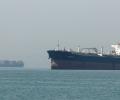
Pakistan's Interior Minister Mohsin Naqvi has been in Tehran meeting with Iranian officials in an attempt to mediate and resolve the ongoing conflict between the US and Iran. This marks Naqvi's second visit in less than a week as Pakistan seeks to bridge the differences between the two nations and establish long-term stability in the region.

It was left to an incensed Gen Z to show the rest of India that enough was enough, and that the time had come to shatter the fear psychosis generated by the government's authoritarian approach to protests and criticism, points out M R Narayan Swamy.

US Secretary of State Marco Rubio stated that significant progress has been made in negotiations with Iran to reopen the Strait of Hormuz, a critical global shipping lane. However, President Donald Trump remains cautious, vowing not to accept a 'bad deal' regarding Iran's nuclear programme and regional stability.

US President Donald Trump indicated that a peace deal with Iran is possible, but stressed that military action remains an option if talks fail. He emphasised the need for guarantees against nuclear weapons in any agreement.

Congress leader Rahul Gandhi has accused the Modi government of 'destroying' India's education system, expressing full support for protesting students and their demands, including the resignation of Education Minister Dharmendra Pradhan and an apology from Prime Minister Narendra Modi.

Indian farmers staged a significant protest at the Shambhu border against a proposed India-US trade deal, fearing its detrimental effects on the domestic agricultural sector and demanding its immediate abandonment. They later ended their agitation after assurances from the Haryana Agriculture Minister regarding the release of detained farmers and a meeting with the Union Agriculture Minister.

Educator and climate activist Sonam Wangchuk's health has significantly deteriorated on the 16th day of his indefinite hunger strike at Jantar Mantar, protesting alleged examination irregularities. His blood glucose and weight have dropped, prompting calls from the Cockroach Janta Party (CJP) and political leaders like AAP's Atishi and CPI(M) MPs for government intervention and accountability.

Pakistan has intensified its efforts to bring the US and Iran back to the negotiating table to end the war in West Asia, following President Trump's extension of the ceasefire. Pakistani officials have engaged with Iranian, Turkish, and British counterparts to promote dialogue and diplomacy for a peaceful resolution.

Poland's Secretary of State, Wladyslaw T Bartoszewski, has credited Prime Minister Narendra Modi with preventing Russian President Vladimir Putin from using tactical nuclear weapons in Ukraine in late 2022, highlighting Modi's significant influence on the Russian leader.

The harsh truth is that the US is no longer a reliable partner, cautions Ramesh Menon.

On camera, youngsters gave their names, where they'd come from, where they were studying or working - and then proceeded to criticize Modi. On camera, they held up posters mocking Modi, points out Jyoti Punwani.

China on Tuesday listed out the four-point proposal given by President Xi Jinping for lasting peace in the Middle East.

The Avengers: Doomsday teaser trailer has dropped, revealing an ambitious, potentially overcrowded multiverse saga featuring Doctor Doom, returning heroes, and universe-colliding stakes that could define the future of the MCU.
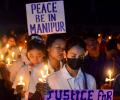
Manipur Chief Minister N Biren Singh on Thursday said the state government is working towards peace talks and has held several meetings in Assam's Silchar.

US President Donald Trump on Thursday announced that Israel and Lebanon have reached an agreement to initiate a 10-day ceasefire, following intensified diplomatic efforts to reduce hostilities in the region.

The US military carried out 'self-defence strikes' targeting Iranian missile launch sites and boats near the Strait of Hormuz, even as President Trump announced progress in ceasefire negotiations, stating Iran's enriched uranium will be 'turned over' or destroyed.
